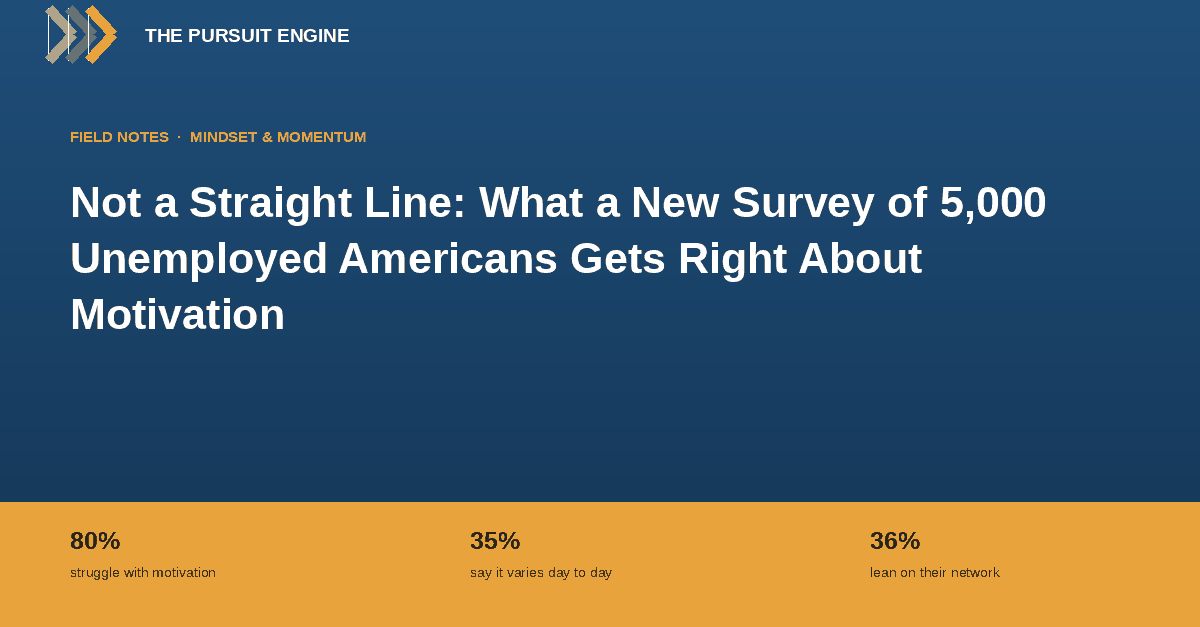
Not a Straight Line: What a New Survey of 5,000 Unemployed Americans Gets Right About Motivation
A new survey of 5,000 unemployed Americans found 8 in 10 struggle with motivation, but only 23% say it stays steady. Here's what the other two groups actually reveal.
Read the note →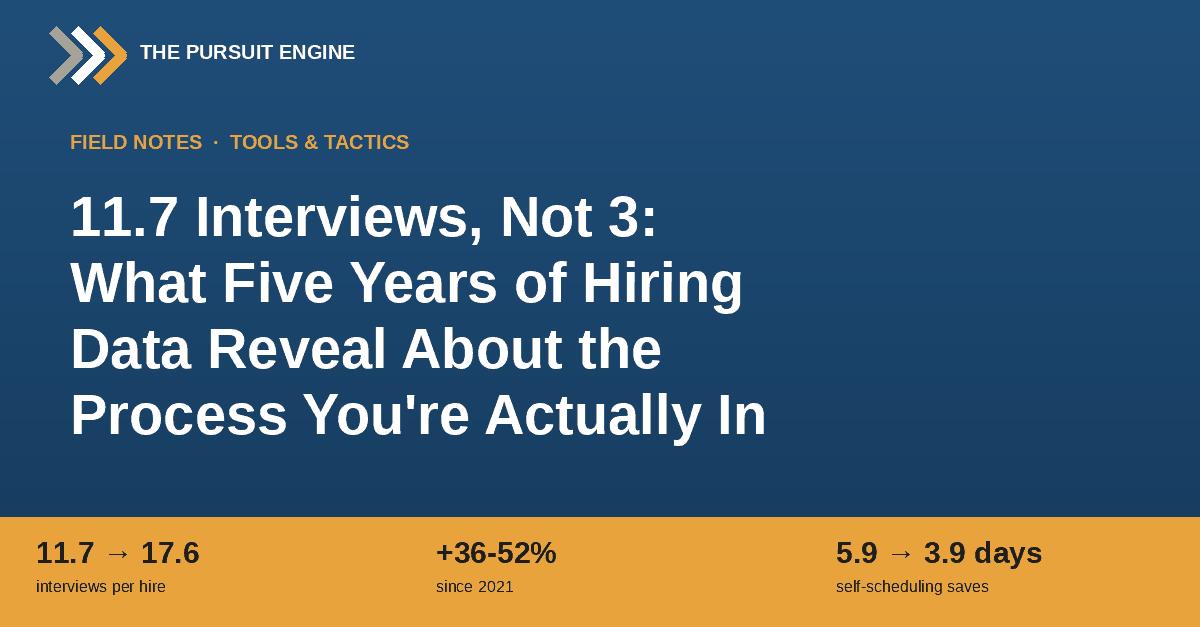
11.7 Interviews, Not 3: What Five Years of Hiring Data Reveal About the Process You're Actually In
It now takes 11.7 to 17.6 interviews to land one offer, up as much as 52 percent since 2021. But the slowest part of the process, scheduling, is also the one piece a candidate can actually control.
Read the note →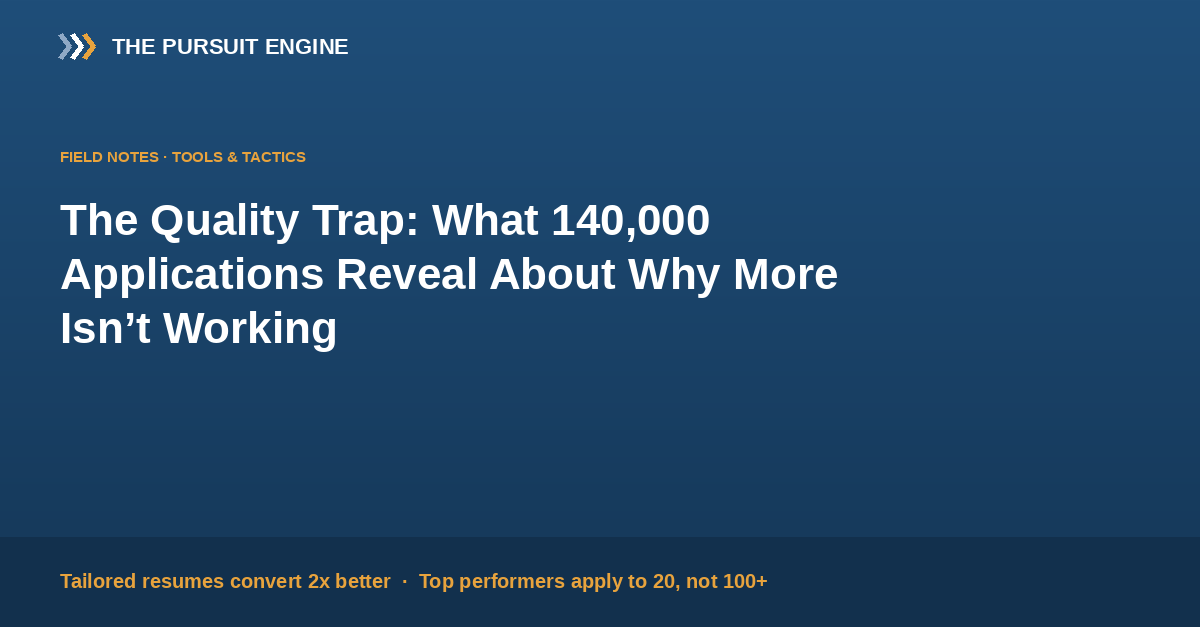
The Quality Trap: What 140,000 Applications Reveal About Why More Isn't Working
Job seekers who kept their application count under 20 converted to interviews at 9.25 percent, nearly 4 times the rate of those who passed 100. Tailored resumes converted at roughly double the rate of generic ones. Here is what 140,000 real applications actually show.
Read the note →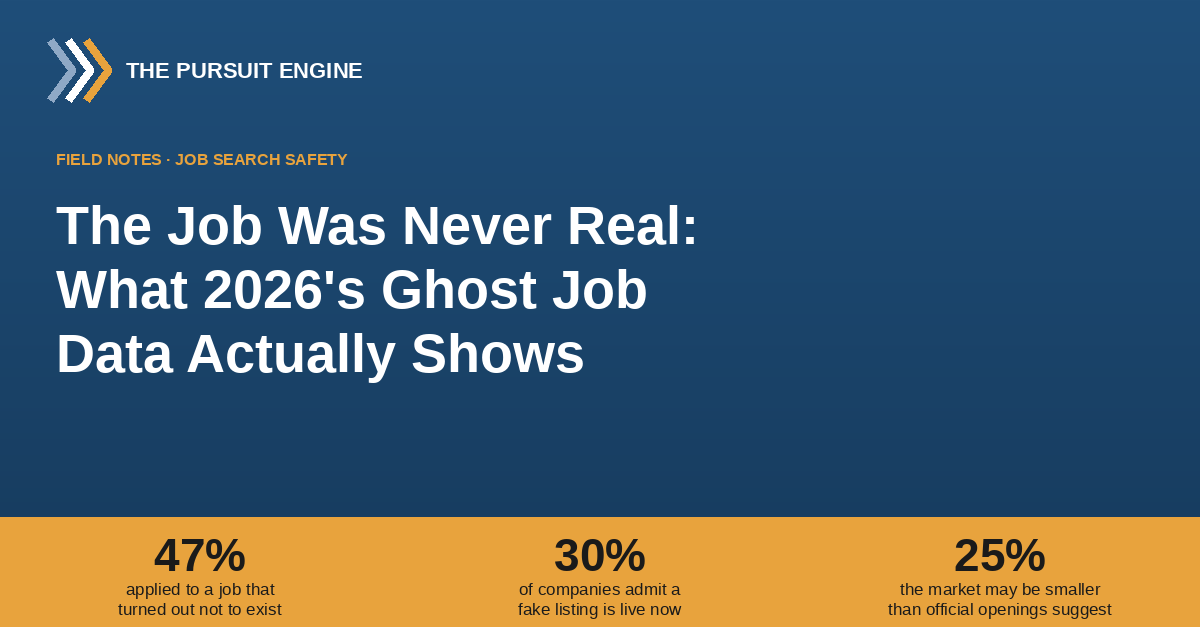
The Job Was Never Real: What 2026's Ghost Job Data Actually Shows
47 percent of job seekers have applied to a role that turned out not to exist, and 30 percent of companies admit a fake listing is live right now. Here is what the 2026 data actually shows, and how to spot a ghost job before you spend a week on it.
Read the note →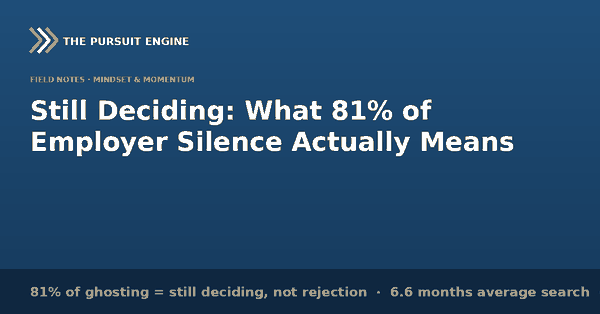
Still Deciding: What 81% of Employer Silence Actually Means
94.3 percent of applications go unanswered and the average search now runs 6.6 months. But new data on why employers actually go quiet found 81 percent of ghosting happens because they are still deciding, not because you were rejected.
Read the note →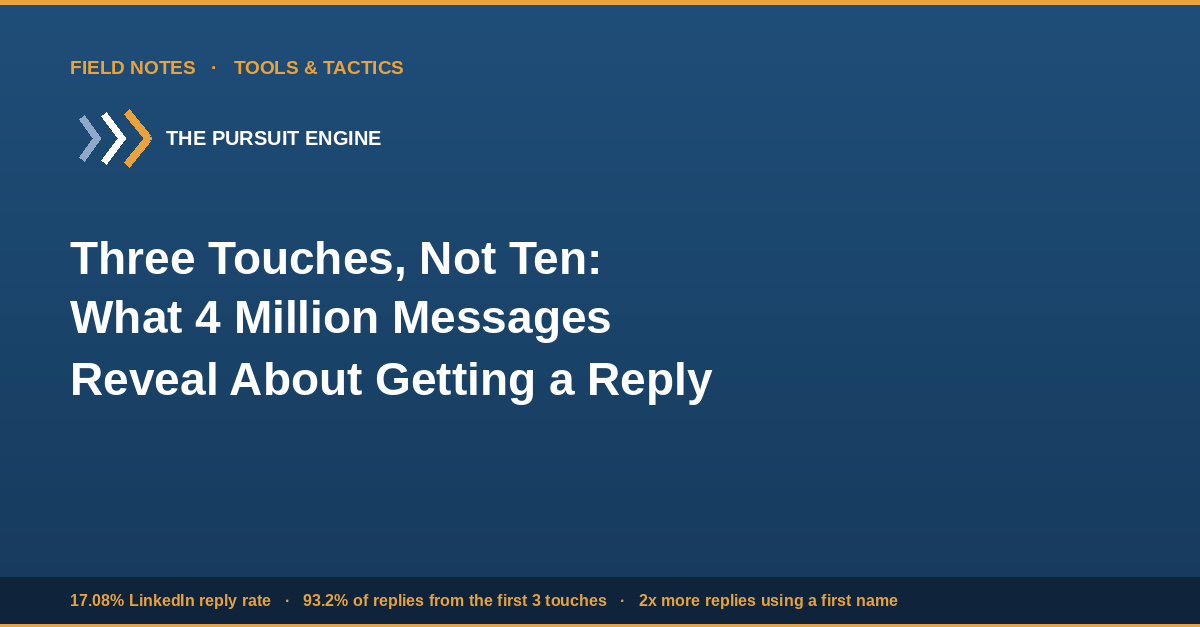
Three Touches, Not Ten: What 4 Million Recruiting Messages Reveal About Getting a Reply
Recruiters have quietly figured out what actually gets a reply: LinkedIn over email, three follow-ups instead of ten, a first name instead of none. Here is the real 2026 data, and how to use it the next time you are the one reaching out.
Read the note →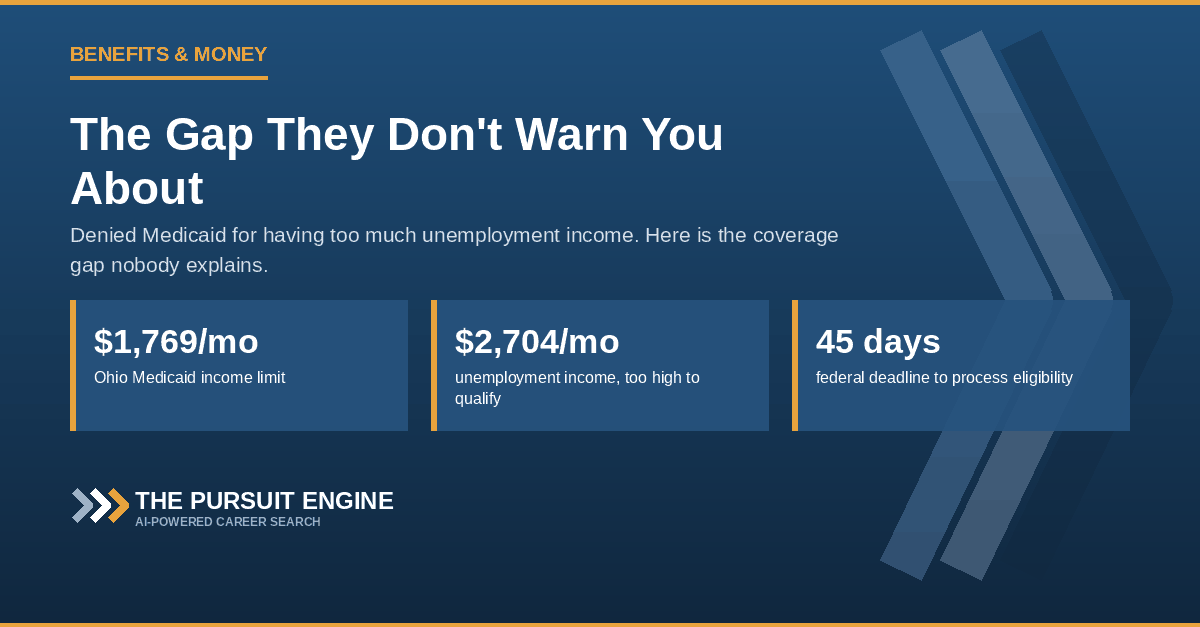
The Gap They Don't Warn You About
Denied Medicaid for having too much unemployment income, past the COBRA window, racing an ACA enrollment deadline. A firsthand account of the coverage gap after a layoff.
Read the note →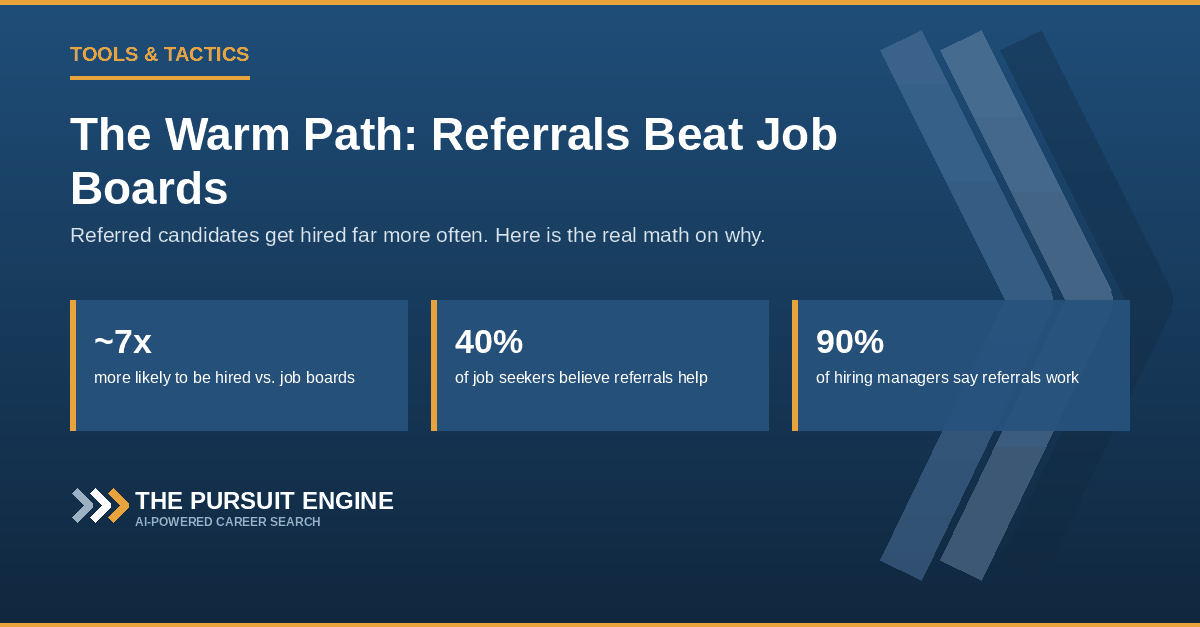
The Warm Path: Why Referred Candidates Get Hired Up to 7x More Often
Referred candidates get hired at roughly 4 to 7 times the rate of job board applicants, per 2026 data. Yet only 40 percent of job seekers believe a referral actually helps them stand out. Here is the real math, and how to use it without it feeling like begging.
Read the note →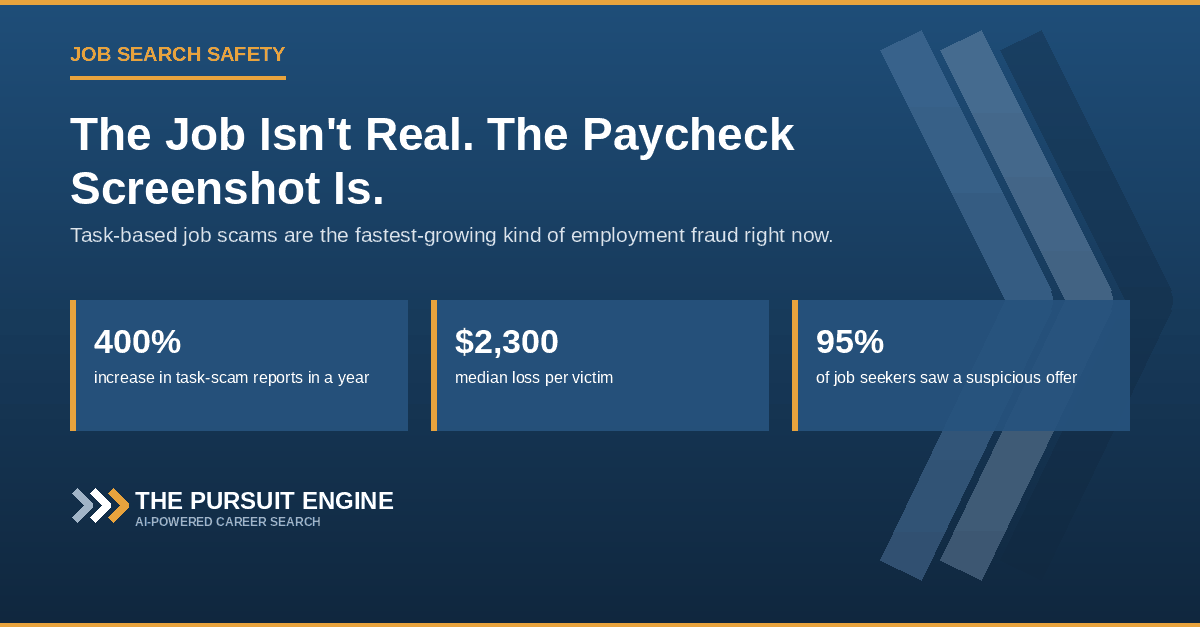
The Job Isn't Real. The Paycheck Screenshot Is.
Task-based job scams jumped 400 percent in a year and now carry a $2,300 median loss. Here is exactly how they work, the 2026 data on who they target, and how to spot one before you're in it.
Read the note →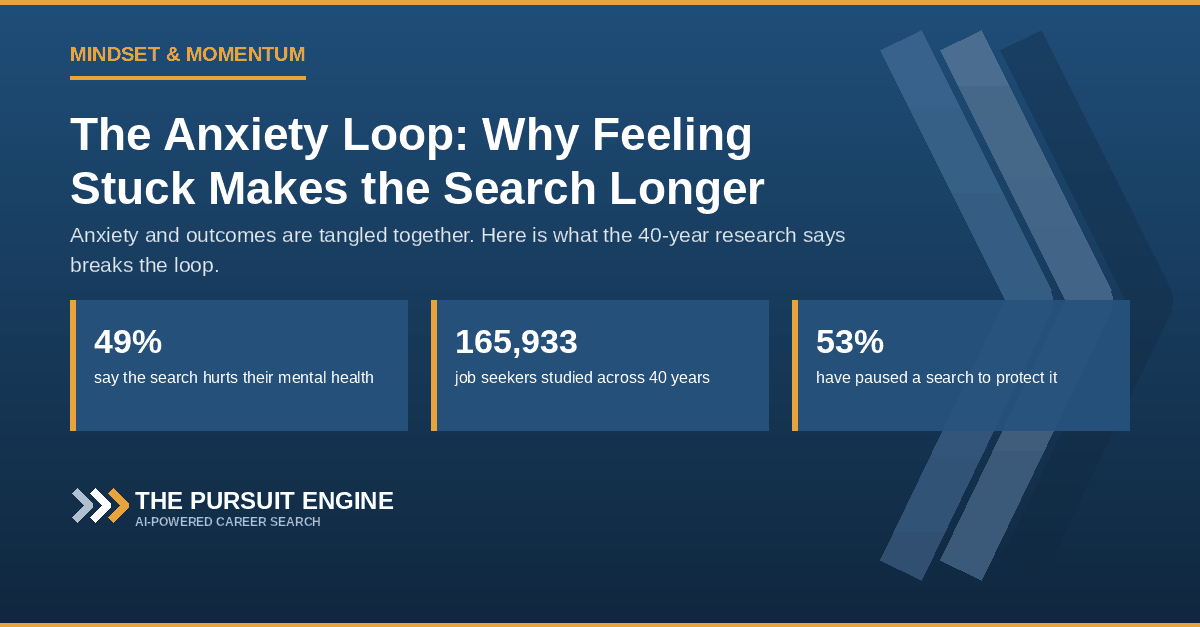
The Anxiety Loop: Why Feeling Stuck Makes the Search Longer, and What Breaks It
49 percent of job seekers say searching hurts their mental health. Research on 165,933 job seekers found anxiety is measurably tied to worse outcomes. Here is the loop, and what actually breaks it.
Read the note →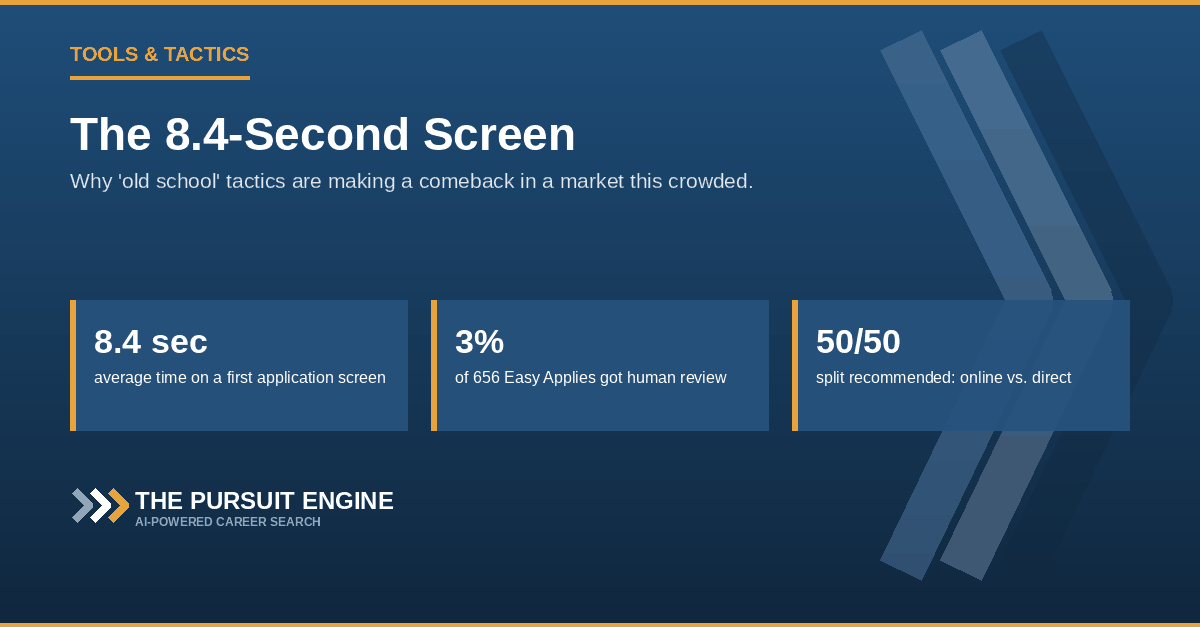
The 8.4-Second Screen: Why "Old School" Tactics Are Making a Comeback
Recruiters spend an average of 8.4 seconds on each application. One job seeker sent 656 online applications and got human review on 3 percent of them. Here is why networking and targeted outreach are outperforming apply-everywhere in 2026.
Read the note →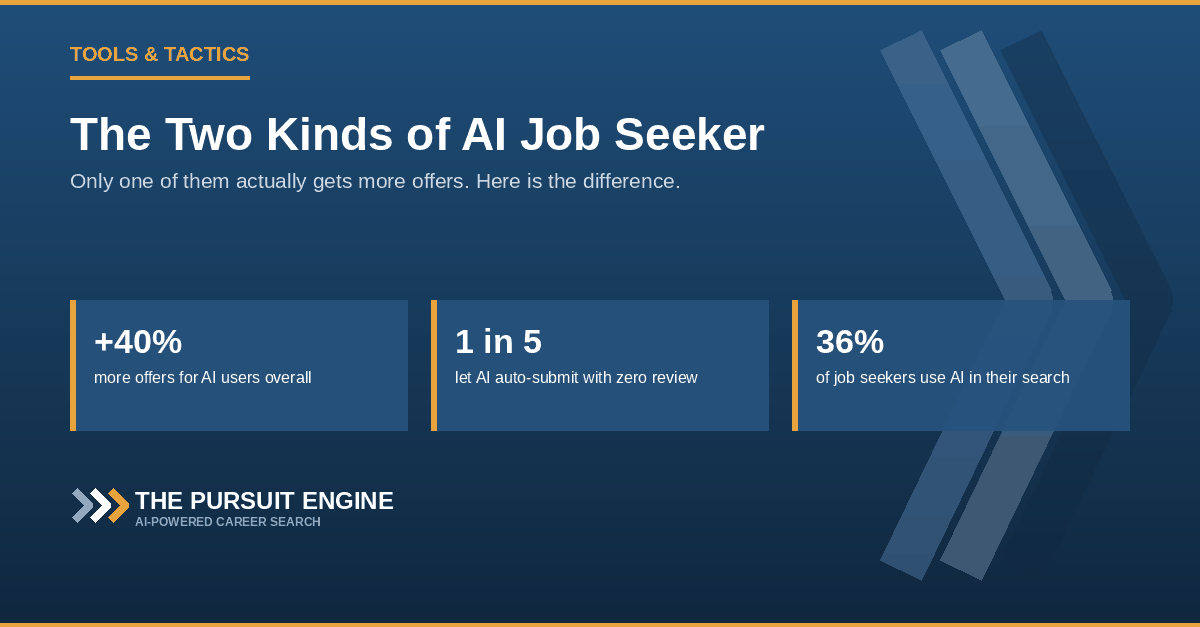
The Two Kinds of AI Job Seeker (Only One Gets More Offers)
People using AI in their job search get 40 percent more offers on average. But 1 in 5 let it auto-submit applications with zero review. Here is the real split between the AI use that works and the AI use that quietly sabotages you.
Read the note →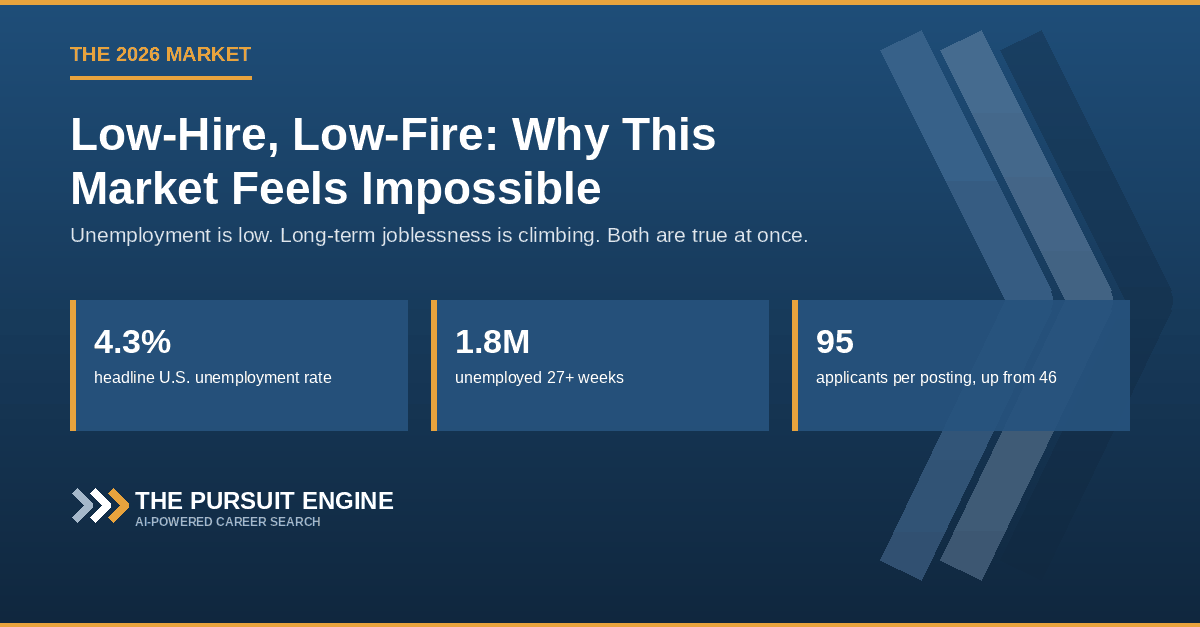
Low-Hire, Low-Fire: The Two Words That Explain Why This Market Feels Impossible
Unemployment is 4.3 percent. At the same time, 1.8 million people have been out of work more than six months, the highest share in years. Here is why both numbers are true, and what to actually do about it.
Read the note →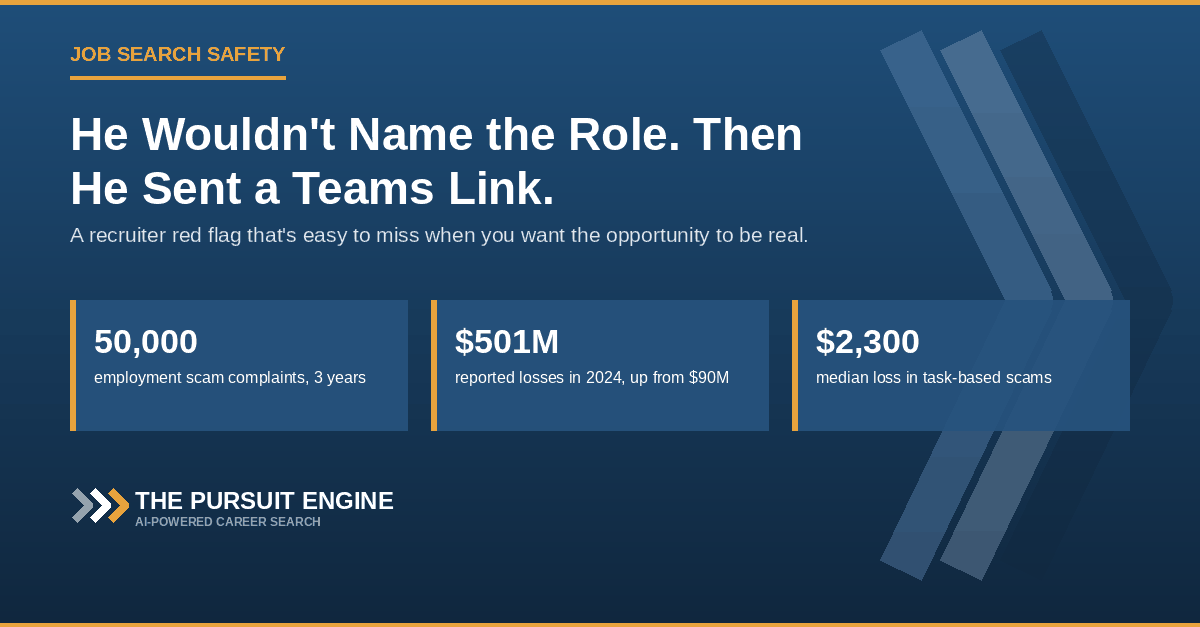
He Wouldn't Name the Role. Then He Sent Me a Teams Link.
A recruiter offered me a leadership opportunity, then refused to name the role twice and pushed me to a personal Microsoft Teams invite instead. Here is exactly why that specific move is the tell.
Read the note →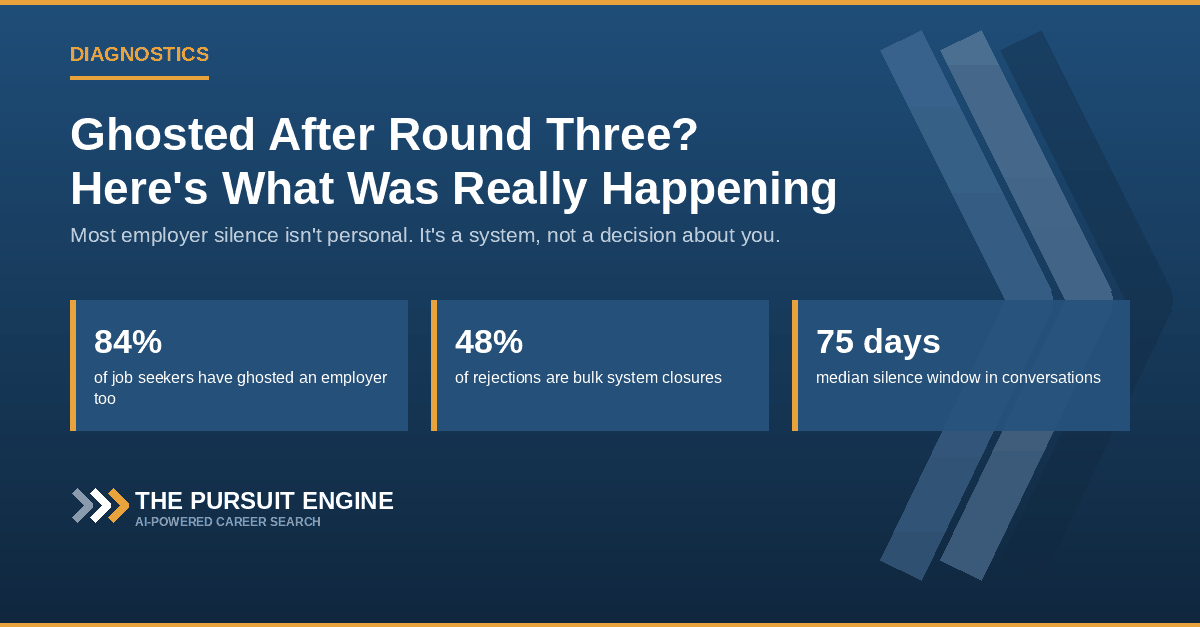
Ghosted After Round Three? Here's What Was Actually Happening on Their Side
Most employer "ghosting" isn't a person deciding to ignore you, it's a bulk system closure or a stuck internal decision. Here's what the data actually shows, and when to let a role go.
Read the note →
291 Applications Per Hire: The Real Number Behind Why This Search Feels Impossible
Recruiters now screen nearly triple the applications they did in 2021. Here is what is actually driving the flood, why ghost jobs are not paranoia, and what still works when you apply.
Read the note →
A Client Said the Thing Nobody Admits: "I Freeze Right Before Every Interview." So Do I.
The 30-second breathing technique a Stanford study found beats meditation for anxiety, and the one-word reframe from a Harvard study that outperforms trying to calm down.
Read the note →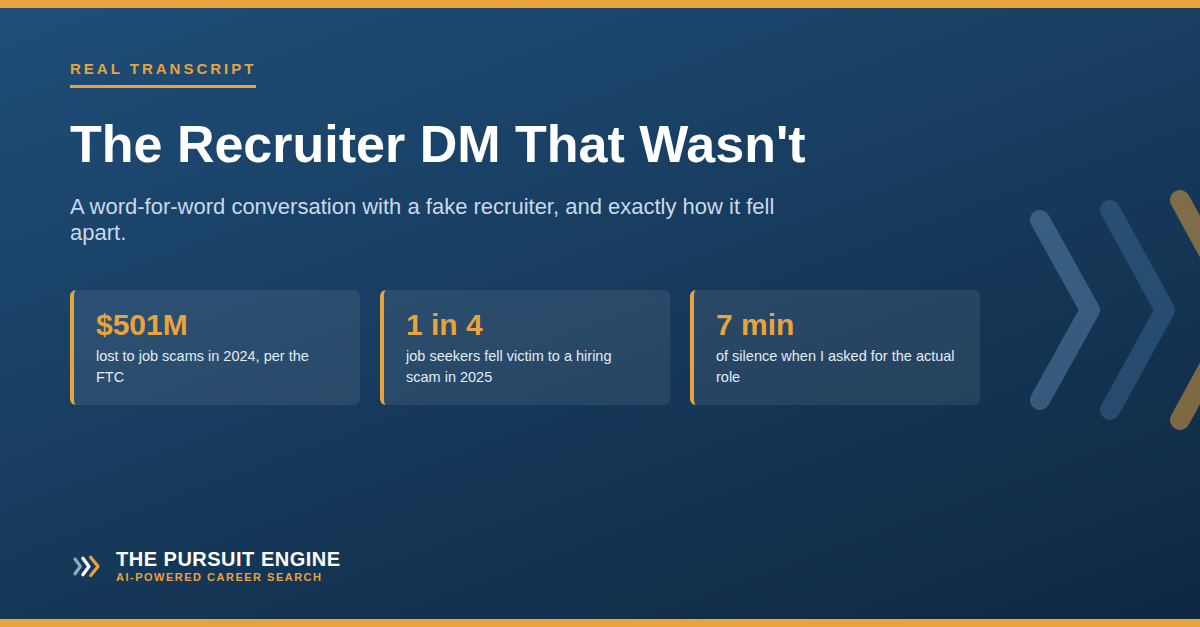
The Recruiter DM That Wasn't: A Real Transcript
She critiqued a resume I never sent her, using a method that doesn't exist. Here is the whole conversation, word for word, and exactly where it fell apart.
Read the note →
My COBRA Paperwork Arrived Before I Told My Family. Here Is the Rule Nobody Explains.
Voluntarily dropping COBRA does not qualify you for a Special Enrollment Period, straight from HealthCare.gov. Here is the 60-day clock nobody explains, and how to price both options before a deadline chooses for you.
Read the note →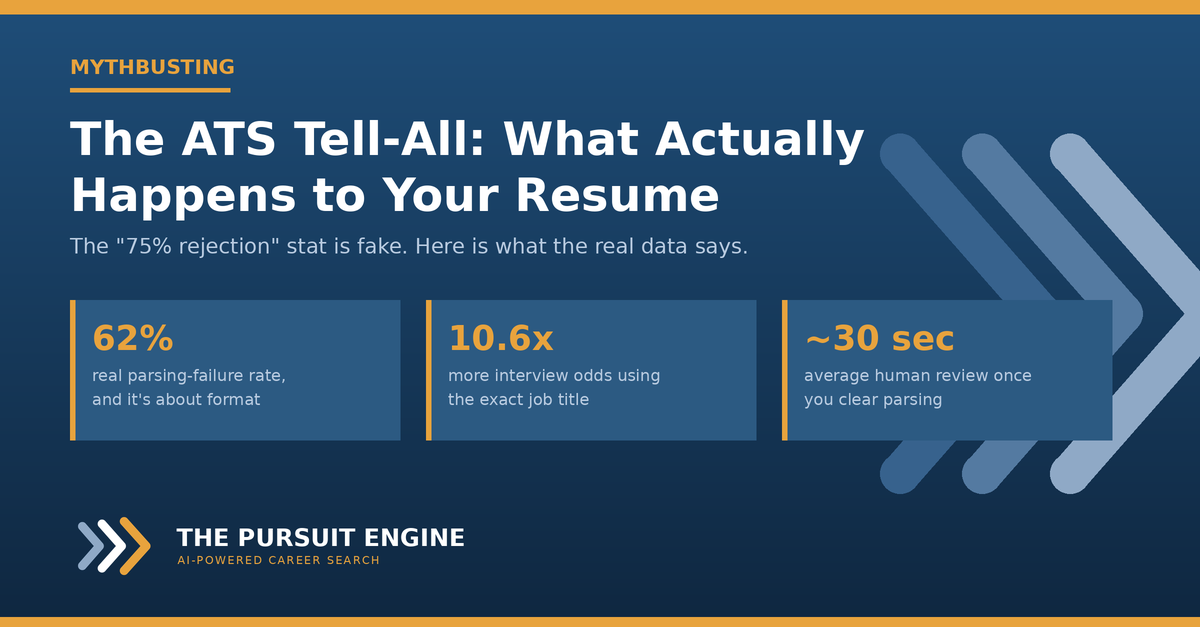
The ATS Tell-All: What Actually Happens to Your Resume Before a Human Sees It
The "75% rejection" stat is fake. Here is what an ATS actually does, where resumes really die (62%, and it's about format), and the one line that raises interview odds 10.6x.
Read the note →
Sunday Night, and the Real Math Behind Why This Search Feels Impossible
834 applicants on a single LinkedIn Easy Apply posting. 53 percent of job seekers ghosted by an employer this year, a three-year peak. A 401(k) withdrawal that quietly costs $287,000 by retirement. Here is the real 2026 data, and the one thing that still reliably works.
Read the note →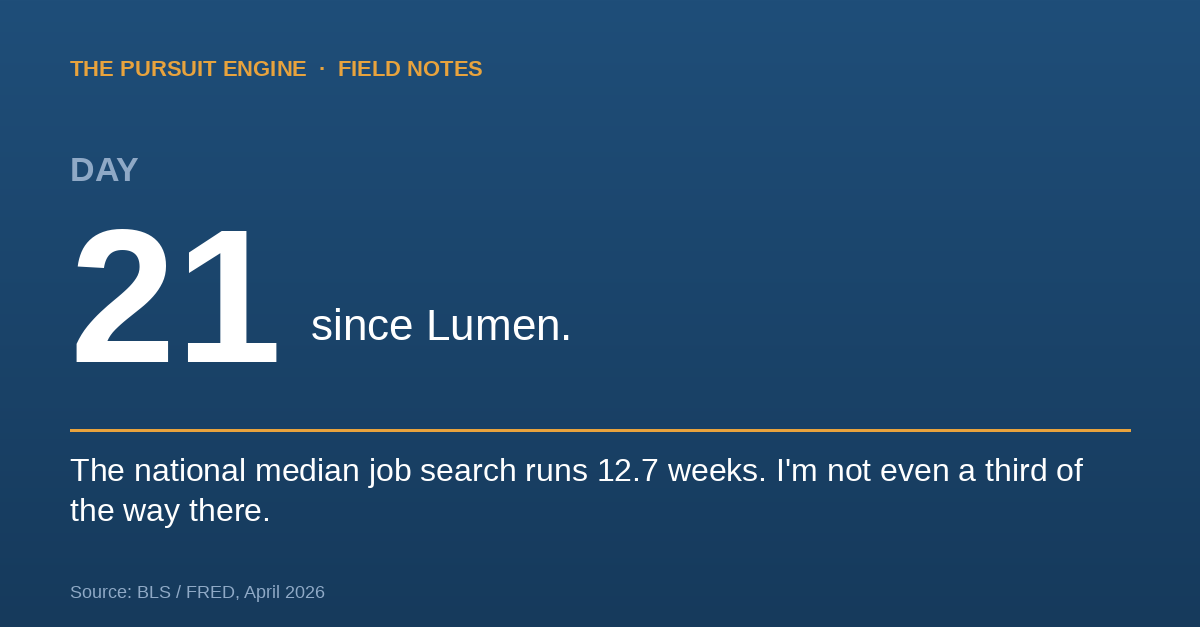
It's Been 12 Days Since Lumen. The National Data Says I'm Not Even a Sixth of the Way There.
The national median job search runs 12.7 weeks, the average 24.4. Here is the real 2026 BLS, Challenger Gray, and Indeed data on how long a search actually takes, why this market is structurally different, and what separates a search that closes in weeks from one that stretches into months.
Read the note →
Two Fake Recruiters Found Me in 48 Hours. Here Is Exactly How I Knew.
One impersonated a real staffing firm. One impersonated Microsoft, with a $220,000 to $380,000 salary range and a full benefits list. Both wanted the same thing: a resume sent to a personal Gmail address. Here is the sixty second check that catches almost all of it.
Read the note →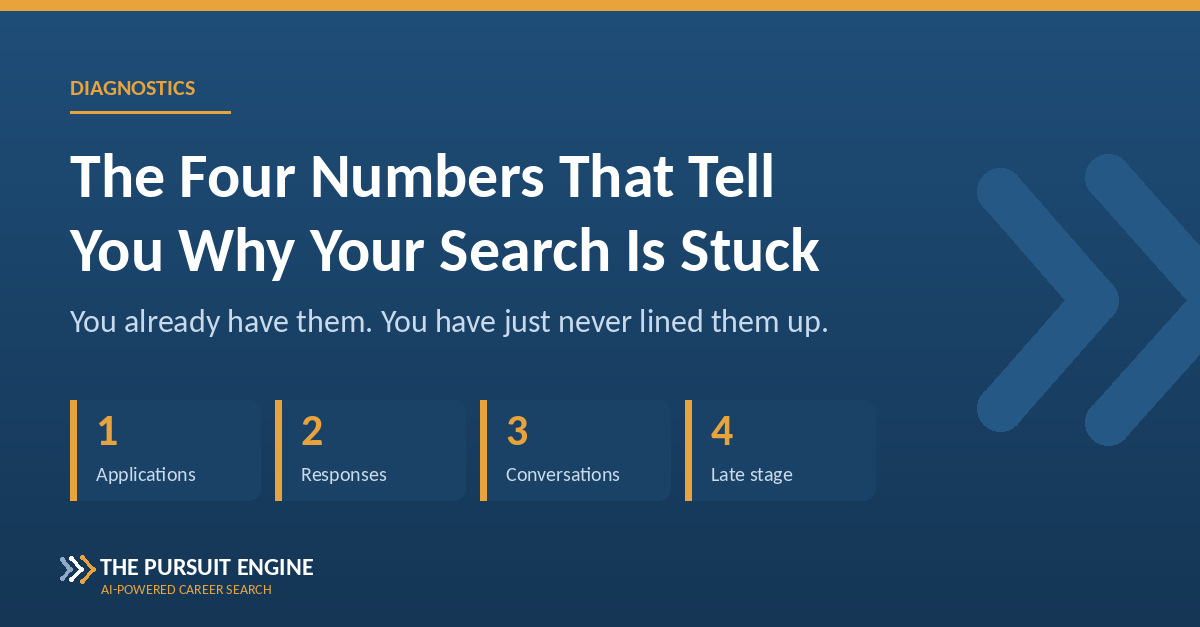
The Four Numbers That Tell You Why Your Job Search Is Stuck
Most job search advice is guessing. Four numbers you already have will diagnose almost any stuck search in about five minutes, and tell you which single thing to fix instead of all the things the internet tells you to do.
Read the note →